
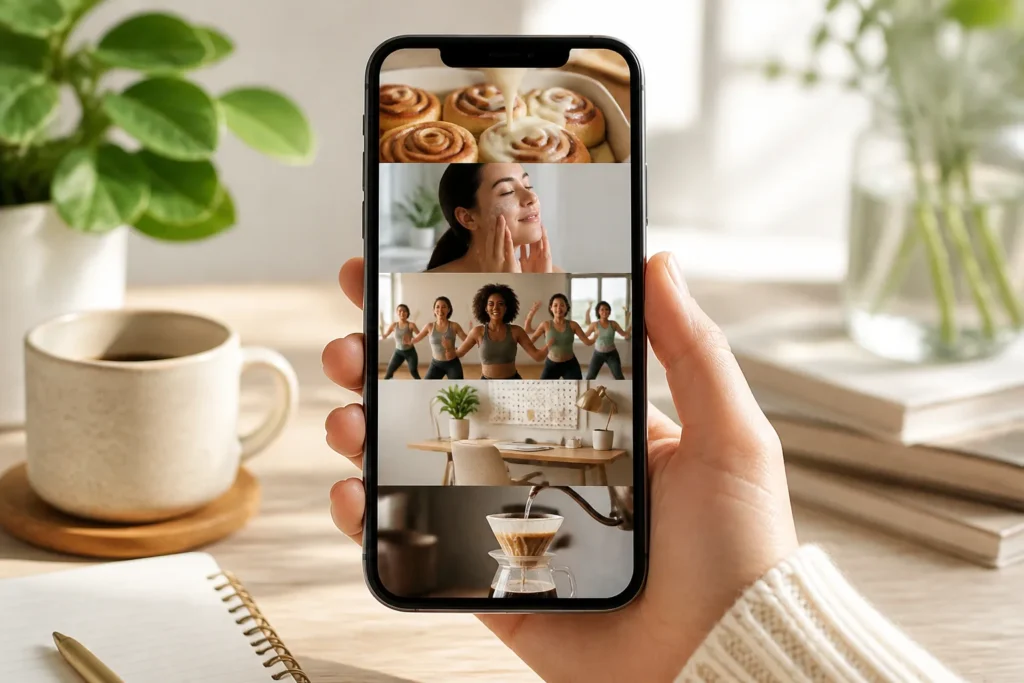
Small businesses can make YouTube Shorts about quick tips, tutorials, behind-the-scenes work, transformations, and daily operations. Examples include a 30-second cinnamon-roll preparation video, a skincare tutorial, fitness-class footage, a workspace transformation, and a coffee-business day in the life. YouTube Shorts ideas for small businesses should fit your audience, goals, and available time.
- Preppy Kitchen shared a 30-second behind-the-scenes video showing the making of its signature cinnamon rolls.
- A skincare brand made a 30-second tutorial demonstrating how to create nails using different pairs.
- The supplied source describes educational clips drawn from webinars or tutorials as 15–60-second videos.
- A source lists 60–90 seconds as the sweet spot for most testimonial formats.
What are YouTube Shorts Ideas For Small Business Channels With Examples?
YouTube Shorts ideas for small businesses include quick tips, educational clips, behind-the-scenes footage, transformations, and day-in-the-life videos. These Shorts ideas can be grouped by what a viewer gets to see: a useful tip, a process, or a change.
For cooking, Preppy Kitchen shared a 30-second look at making its signature cinnamon rolls; a skincare brand demonstrated a nail look in a 30-second tutorial. A fitness studio showed clients in class, while a coffee-business entrepreneur filmed a 40-second day in the life. These are practical starting points for short video ideas, not guaranteed formulas.
For bags or retail, a workspace transformation video ended with a display of the creator’s bags. Tech businesses can condense a complex software setup into a tutorial, and how-to Shorts can also suit DIY, beauty, and cooking channels. Choose YouTube Shorts ideas that show what your business makes, teaches, or does.

Which Shorts formats work for tips, testimonials, behind-the-scenes clips, and product demos?
Educational Shorts can take the form of tutorials, myth-busting, FAQs, industry insights, quizzes, or step-by-step guides. Business Shorts concepts might answer one customer question or demonstrate one useful process; the source recommends one concept, a hook, visual changes every few seconds, and a next step.
For testimonials, focus on one specific benefit, keep the customer’s own voice prominent, or tell a before-and-after story. A case study can feature specific metrics, with the source recommending that the number appear early. The source describes 30–60 seconds as a quick-win testimonial length and 60–90 seconds as a suggested sweet spot for most testimonial formats; those are source recommendations, not universal platform requirements.
Capture candid setup, break, or teardown moments and use captions to explain the context. Product demonstrations can be mini walkthroughs or artistic shots with music and no words or text. These formats give these ideas a clear purpose: teach, show proof, or reveal the product.
How should you choose Shorts ideas for your audience, goals, and resources?
Your Shorts mix should fit your audience, available bandwidth, and growth goals. YouTube Shorts ideas for small businesses are most useful when they suit the people you want to reach and the time you can realistically spend making videos.
The source advises choosing channels that match your audience instead of trying to maintain a presence everywhere, then testing two or three channels for 60–90 days before expanding. That’s general channel-selection advice, not a Shorts-specific posting rule. For cadence, one source suggests two to four short-form videos per week, while another recommends one YouTube video per week; treat these as separate planning suggestions, not a single requirement.
Review audience-retention spikes and moments that generated comments to find promising material. Then assess watch time, saves, shares, profile visits, views, and whether videos meet your marketing goals. Use those signals to test and refine these Shorts ideas rather than assuming one format will work for every audience.
Start with a manageable mix. Expand only when your time and results support it.

What length, aspect ratio, and resolution should a small-business YouTube Short use?
The available source describes educational clips drawn from webinars or tutorials as 15–60-second videos. That range is a description of those educational clips, not proof of a universal Shorts length requirement. Short video ideas can therefore use that duration as one source-backed reference point, while recognizing that the ledger doesn’t establish a required length for every format.
The supplied claims do not establish an aspect ratio, resolution, or upload requirements. Those specifications are unknown from the available evidence, so don’t treat a guessed format or resolution as a confirmed YouTube requirement. The examples in the supplied material include videos described as 9, 30, and seconds, but those are reported examples rather than platform rules.
For planning, choose a duration that lets you deliver one clear idea, then verify technical requirements against current YouTube guidance before publishing. YouTube Shorts Ideas For Small Business Channels With Examples can guide the topic and story, but the claims provided here can’t settle the technical upload settings.
How can you plan, film, and publish a YouTube Short step by step?
A simple plan helps you turn YouTube Shorts ideas into a focused video. Use these steps as a practical workflow, not as formal production standards.
- Choose one idea. Keep each short-form video to one idea, message, or takeaway.
- Find material. Review existing videos or blogs for material to repurpose, then check analytics for audience-retention spikes and comment-generating moments.
- Write a hook. Open with a bold statement, relatable question, visual surprise, or promise of value; the source emphasizes the first three seconds.
- Film the result and process. For a condensed tutorial, show the finished result for 2–3 seconds at the beginning. A smartphone, decent lighting, and clear audio are described as enough to start making YouTube videos, not as Shorts-specific standards.
- Edit and publish. Add captions for viewers watching without sound. For testimonials, send one prompt, let the customer record on their schedule, and edit vertically with captions. End educational Shorts with a next step.
Repeat the workflow with another Shorts concept that fits your audience.

How much does it cost to make Shorts in-house or hire a creator or agency?
The supplied source describes many smartphone-made video ideas as low-cost, but it gives no typical price ranges for in-house production, individual creators, or agencies. Specific hiring prices and a numerical cost comparison are unknown from the available claims. These ideas can be planned around a phone-based workflow, but the evidence here doesn’t establish what that will cost your business.
The source also cautions that animation takes time and may look rudimentary without professional production, and it recommends outsourcing animation. That advice doesn’t include a price or quantify how outsourcing compares with making other types of Shorts in-house.
Before budgeting, define the work you need: filming, editing, animation, or captions. Then request quotes for that scope and compare them with the time your team can commit. Treat any specific price as unknown until you have a quote; the supplied claims don’t support a standard rate for Shorts production.
Can small-business channels monetize Shorts, and what eligibility requirements apply?
The supplied claim ledger contains no YouTube Partner Program eligibility thresholds or Shorts monetization requirements, so the requirements are unknown from the available evidence. These Shorts ideas can support a channel’s content planning, but the claims provided here can’t confirm whether a channel qualifies to earn revenue from Shorts.
Don’t rely on an assumed subscriber count, view threshold, or watch-time figure based on this article. None is established by the supplied claims. Check current YouTube guidance for the eligibility rules that apply to your channel and location before making a monetization plan.
You can still evaluate whether a Short serves your business goals by tracking the metrics the sources recommend, including watch time, saves, shares, profile visits, and views. Those are content-assessment metrics, not evidence of monetization eligibility. Keep short video ideas and program requirements as separate planning questions.

What copyright, privacy, and trend-related risks should you consider?
For influencer partnerships, the supplied source says to use clear FTC disclosure, including when content is gifted rather than paid. For customer testimonial videos, permission is listed as a resource to account for. YouTube Shorts ideas that feature other people should be planned with those disclosure and permission points in mind.
If a publicity stunt includes participants, plan contingencies and allow time for planning; the source also says to know what release forms or language are needed to use participants’ likenesses. The claims do not set out broader copyright rules, so no further legal requirements can be confirmed here.
For sensitive subjects, the source recommends placing a content warning at the beginning of the Short. It also gives time-sensitive advice for joining a challenge: participate within the first one to three days after it goes viral. That is the source’s suggestion, not a guarantee that a trend will suit your business. Check fit and preparation before using business Shorts concepts built around a challenge.

| Video example or format | Stated duration |
|---|---|
| Preppy Kitchen used a behind-the-scenes video showing the making of its… | 30-second |
| A skincare brand tutorial demonstrating how to create nails using different… | 30-second |
| Maddfitness Studio video of clients in a fitness class | 30-second |
| Olivia Jean video showing a warehouse transformed into a workspace and ending… | 9-second |
| A coffee-business entrepreneur day-in-the-life video showing a gym workout, work… | 40-second |
| Educational clips drawn from webinars or tutorials | 15–60-second videos |
| Testimonial formats | 60–90 seconds |
Principali punti chiave
- Choose a Shorts mix that fits your audience, bandwidth, and growth goals.
- Keep each short-form video focused on one idea, message, or takeaway.
- Use retention spikes and comments to identify promising moments to adapt into Shorts.
- Assess short-form content with watch time, saves, shares, profile visits, and views.
- Verify technical upload requirements and monetization eligibility with current YouTube guidance because the supplied claims don’t establish them.
- Pick three YouTube Shorts ideas from this list, film them with your phone this week, and repeat the format that gets the most views.
Domande frequenti
What is the most popular thing on YouTube Shorts?
The available claims don’t establish whether Shorts are the most popular YouTube format. They do support evergreen Shorts such as quick tips, previews, highlights, and educational snippets.
What are ideas for a vlog?
The available claims don’t rank ten vlog ideas, but they support videos about how products are made, daily operations, quick tips, FAQs, myth-busting, industry insights, quizzes, tutorials, transformations, and a day in the life.
What are some good YouTube business ideas?
The claims support business videos such as tutorials, product walkthroughs, FAQs, industry insights, customer testimonials, and behind-the-scenes clips. They don’t identify a single best business idea.
Can I monetize my channel with Shorts?
The supplied claims don’t state YouTube Partner Program eligibility thresholds or Shorts monetization requirements, so the requirements can’t be confirmed from this evidence. Check current YouTube guidance before making plans.


 English
 Español
 Deutsch
 Français
 Italiano
 العربية