

Why your YouTube impressions are high but views are low
YouTube is showing your video to people, but relatively few are choosing to watch. The gap between YouTube impressions and views often comes down to a low click-through rate or a mismatch between your title, thumbnail, and the people seeing them.
- Quick takeaways:
- Check click-through rate by traffic source.
- Review your thumbnail and title together, not separately.
- Compare which audience sources are contributing impressions and views.
- Make one evidence-based change at a time.
High impressions alone don’t prove that a video is performing well. Views show whether people chose to watch, while watch time and retention help you understand what happened after the click. Traffic source adds another layer: the same title and thumbnail may get different responses on Home, Search, or Suggested videos.
A low view count despite high impressions is a useful question to investigate, but don’t assume one number tells the whole story. Impressions don’t guarantee views, and there isn’t one click-through rate target that applies to every topic or traffic source. A CTR that looks modest may accompany growing views if YouTube is showing your video to a broader audience.
Start by checking the numbers over the same date range and comparing similar videos. Why Your YouTube Impressions Are High But views Are Low becomes easier to answer when you separate exposure, choice, and viewing behavior instead of treating them as one result.


What do YouTube impressions and click-through rate mean?
A YouTube impression is a counted occasion when YouTube displays your video’s thumbnail in an eligible place on the platform. Not every appearance qualifies. For example, a thumbnail shown in some external placements or certain other contexts may not be counted as an impression in Studio.
Click-through rate (CTR) is the share of counted impressions that lead to a view. If YouTube records many impressions but a smaller share of viewers choose to watch, CTR can help explain why the view total is not growing at the same pace. This YouTube impressions problem may therefore point you toward the choice viewers make after seeing the thumbnail, rather than toward distribution alone.
Illustrative example: Imagine two videos each receive the same number of counted impressions. If fewer people click the first video’s title and thumbnail, it will generally receive fewer views from those impressions than the second video, whose packaging earns more clicks. The example shows the relationship, not a promised outcome or a universal rate.
CTR isn’t a grade for your whole channel. Read it alongside views, watch time, and traffic source. A video can have a lower CTR as it reaches beyond your regular audience and still gain views. Conversely, a strong CTR doesn’t guarantee viewers will stay once the video starts.
When the gap between YouTube impressions and views is your concern, look at the pattern rather than judging a single metric. A weak click-through on strong impressions could reflect packaging, a change in the audience being reached, or both. Use the date range and source breakdown to establish which explanation fits before changing anything.

Why are impressions high but CTR low?
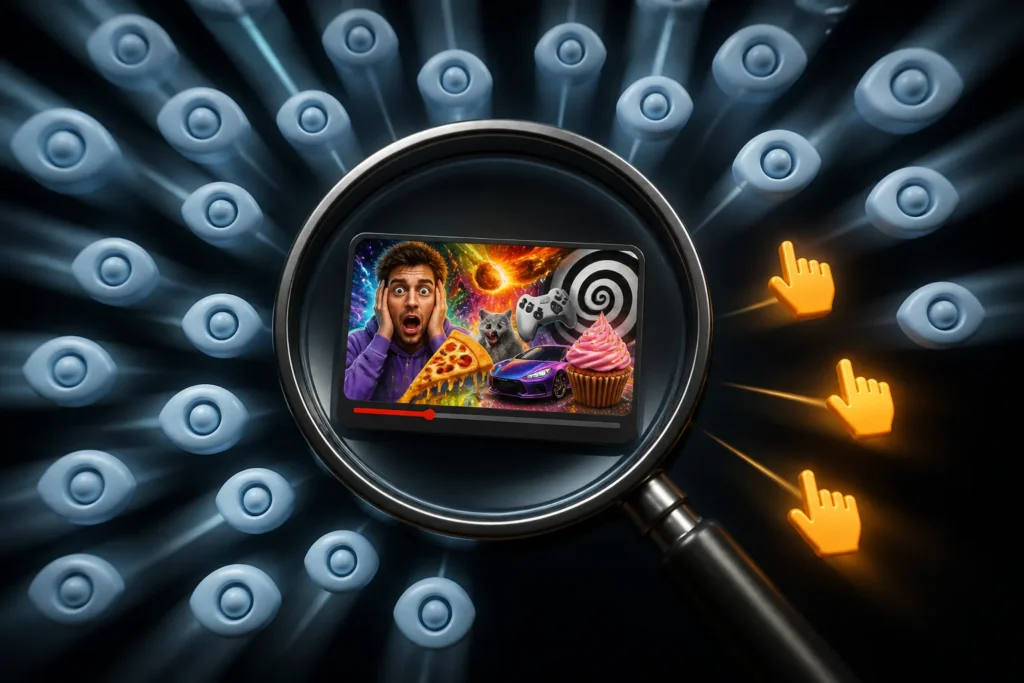
High impressions with low CTR usually mean the thumbnail and title aren’t persuading enough of the people who see them to click. That can happen because the thumbnail is difficult to read at small size, the title is vague or crowded, or the two elements seem to promise different videos.
Check the thumbnail on a phone-sized display. If the key object, expression, or text disappears when it’s small, simplify it. One clear visual idea, such as a close-up of a leaking pipe beside a repaired section, is easier to understand than several small photos, labels, and arrows competing for attention.
The title should name a clear topic or problem. For example, “How to Fix a Leaking Kitchen Faucet” tells the viewer what the video addresses. “My New Video” gives no reason to expect a useful answer. The YouTube impressions-versus-views gap can be a packaging problem when a viewer can’t quickly tell what they’ll get.
Title and thumbnail should work as a pair. If a title promises a step-by-step repair but the image suggests a product review, viewers may hesitate because the offer is unclear. Curiosity can help attract attention, but clarity matters too. A title that raises a question it doesn’t answer may earn a click and then disappoint the viewer.
Also consider who is seeing the video. As distribution expands, YouTube may show it to people less familiar with your channel or topic. CTR can fall in that situation even as total views grow. A YouTube impressions gap doesn’t always mean the video is failing. Compare its views and traffic sources over time before deciding.
The gap between YouTube impressions and views has a simple underlying distinction: impressions measure exposure, while views depend on people choosing to watch. To diagnose the gap, look for unclear packaging, a wider audience, or a promise that doesn’t match the content. Those causes can overlap, so change one major element at a time rather than rebuilding everything at once.

How can you tell whether the title or thumbnail is the problem?
Use YouTube Studio’s Analytics و Reach tab to identify where the drop happens. Work through the same date range for each metric so you’re comparing like with like. This process won’t make every result certain, but it will help you choose a sensible next step.
- Compare impressions, views, and CTR. In Analytics, set a date range and note how the three measures move together. A rise in impressions without a similar rise in views is a reason to inspect the packaging, not automatic proof that the thumbnail is the only issue. A low view count despite high impressions should lead you to check the pattern across the full period.
- Check CTR by traffic source. In the Reach tab, compare sources such as Home, Suggested videos, and Search. A video may get a different response from people actively looking for an answer than from people who encounter it while browsing. Don’t combine those audiences into one interpretation.
- Review title and thumbnail together at small size. Ask whether someone unfamiliar with your channel can identify the topic quickly. Then check whether the image and title make the same promise. If the viewer has to decode either one, simplify it.
- Use Test & Compare when available. Test thumbnail options if the feature is available for your video. Change one major element at a time and allow enough data to accumulate for a useful comparison. This YouTube impressions problem may take time to diagnose if the sample is still small.
- Check retention after the click. Retention means how much of the video viewers continue watching. If viewers leave early, your opening may not deliver the outcome the title and thumbnail implied. Compare the opening with the promise, then remove delays or clarify what viewers will learn.
Keep a note of the date range and what you observed before editing. A weak click-through on strong impressions becomes a more manageable question when you can distinguish low response before the click from a weak experience after it. Avoid making multiple changes at once, or you won’t know which adjustment may have contributed to a different result.

Could your audience or traffic source be the reason?
Yes. Traffic source and audience fit affect what a CTR result means. Regular viewers may recognize your style or understand shorthand in a title, while a new viewer needs a clearer explanation. A thumbnail that works for your subscribers might not make sense to someone encountering your channel for the first time.
Open the video’s Reach tab in YouTube Studio. Review which sources contribute impressions, then compare where views are coming from. Home, Suggested videos, and Search can each bring viewers with different expectations. The YouTube impressions-versus-views gap may be explained partly by a source mix that has shifted toward people less familiar with your subject or channel.
For a search-led video, make the title and description accurately reflect the question the video answers. If the video shows how to prepare a small business tax document, say so plainly rather than relying on a vague phrase or an unrelated hook. Use relevant YouTube SEO and أبحاث الكلمات الرئيسية to understand how viewers describe the problem, but don’t stuff terms into the title or description. The video still needs to deliver the answer it claims to offer.
External sites can also send viewers to your YouTube video. However, impressions and CTR aren’t counted the same way for every external appearance, so don’t expect the impression total to represent every time someone encounters the video outside YouTube. Separate external views from eligible on-platform impressions when interpreting results.
Compare videos with similar topics and traffic sources where possible. A tutorial discovered through Search isn’t a direct benchmark for a personal update primarily shown on Home. A YouTube impressions gap is more useful when you compare like with like and account for who was likely to see each video.

What should you change first to get more views?
Start with the clearest problem in the data, not the most dramatic redesign. A practical order is: clarify the video’s promise, improve the title and thumbnail as a pair, check that the opening delivers on that promise, and then review whether the audience source fits the topic.
- Clarify the promise. Write one sentence that says who the video helps and what it helps them do. If you can’t describe the outcome clearly, viewers may not understand it from the title either.
- Pair the title and thumbnail. Make the title specific and the image easy to read at small size. The gap between YouTube impressions and views can sometimes be addressed with this straightforward edit, but the revised packaging must still represent the actual video.
- Check the opening. Make sure the first moments confirm the subject and begin delivering value. Don’t make viewers wait through a long introduction for the solution they clicked to find.
- Review audience fit. Check Reach to see whether the video is being discovered through the sources and viewers you expected. A source mismatch may call for a clearer framing rather than another thumbnail redesign.
Example for a small business coach: Replace “Business Coaching Tips” with “How to Price Your First Coaching Package.” The revised title identifies a concrete problem. A thumbnail could show a simple package-price worksheet with one highlighted figure or a clear “price your offer” message. Use one visual idea, not a collage of client photos, charts, and multiple text labels.
Keep a change log with the date, the element you changed, and the related Studio metrics. Record impressions, views, CTR by source, and retention where relevant. A low view count despite high impressions may take more than one check to resolve, and a log helps you see what changed without claiming that one edit caused every later result.
Sometimes the best move is to wait. A small or early data sample may not support a confident decision, so avoid reacting to every fluctuation. A falling CTR alongside rising views can happen when distribution broadens. Compare the video’s current pattern with its earlier performance and similar uploads before editing again.
DigiSphere offers YouTube thumbnail design, YouTube Video SEO, and Shorts creation for creators who want help with those parts of their channel. Those services are options for improving how content is presented and organized, not promises of a particular view increase. If you need support, first identify whether the likely issue is packaging, audience fit, or the video itself.
This YouTube impressions problem is a reason to investigate, not to change every element at once. Keep your adjustments specific, record what you did, and give the relevant Studio measures time to show a pattern.
Do low views affect watch time, monetization, or ad results?
Watch time is the total time viewers spend watching your videos. A click is only one part of performance: people also need to stay and watch. If you earn more clicks but viewers leave quickly, the packaging may be attracting attention without matching the video experience.
Several money-related measures describe different things. Revenue per mille (RPM) is estimated creator revenue per thousand views. Cost per mille (CPM) is what advertisers pay per thousand ad impressions. Cost per view (CPV) is the amount paid for a video ad view. Don’t treat one as a substitute for another. A weak click-through on strong impressions may concern organic reach, while RPM, CPM, and CPV describe revenue or advertising costs.
Google Ads video promotion can buy exposure, but it doesn’t guarantee organic views, retention, or revenue. Set a clear campaign goal, such as reaching a relevant audience or directing viewers to a specific offer, and evaluate the campaign against that goal. Paid exposure and organic performance are related to different decisions, so assess them separately.
For full YouTube Partner Program ad revenue sharing, the supplied eligibility timing is: until January 31, 2027, you need 1,000 subscribers and either 4,000 public watch hours in the past months or million public Shorts views in the past days. From February 1, 2027, new applicants need 1,000 subscribers and either 8,000 watch hours in the past months or million public Shorts views in the past days. Channels already in YPP keep their status.
Shorts feed views don’t count toward watch hours. The fan funding and Shopping tier remains at subscribers plus either 3,000 watch hours or million Shorts views. Since August 24, 2026, public Shorts view counts start from the first frame, while earnings and YPP eligibility still use engaged views. Since October 1, 2026, re-uploaded Shorts without meaningful changes receive less feed reach.
The YouTube impressions-versus-views gap doesn’t by itself tell you whether you’ll qualify for monetization or earn a particular amount. Track eligible watch hours, Shorts views, and subscriber progress against the relevant requirement, and check the video’s retention and revenue measures separately from its impression count.


When should you get help with a YouTube channel?
Get help when you can’t tell whether the main issue is packaging, audience fit, or a broader channel strategy question. Before choosing support, gather the video’s Reach and retention data, note what you’ve already changed, and describe the result you want. That gives a provider something specific to diagnose.
DigiSphere is a YouTube growth agency led by Michael, a Fiverr Top Rated Seller with 15+ years in digital marketing, 10,000+ completed orders, 5,000+ five-star reviews, and 6,000+ YouTube creators optimized. Its services include YouTube Video SEO, thumbnail design, Shorts creation, Google Ads video promotion, backlinks, and Social Media Ring video sharing for authority signals. These are available services, not guaranteed causes of more views. A YouTube impressions gap may need a different response depending on the channel’s data.
Ask any provider three direct questions: How will you diagnose the issue? What work will you perform? How will you evaluate results? A useful answer should connect the proposed work to your goals and explain what measures will be reviewed, rather than promising a certain number of views or subscribers.
Don’t buy views, subscribers, likes, or comments, and avoid any tactic that violates YouTube policies. Those shortcuts can distort your analytics and put your channel at risk. The gap between YouTube impressions and views is best addressed with a clear diagnosis and legitimate improvements to the content, packaging, or audience strategy.
Your next steps when impressions aren't becoming views
Use this checklist before making another edit:
- Open Analytics and choose a clear date range.
- Use the Reach tab to review impressions, views, and CTR by traffic source.
- Inspect the title and thumbnail together at small display size.
- Make one measured change and record its date and the related metrics.
- Check retention to see whether viewers stay after clicking.
Compare videos with similar topics and sources before drawing conclusions. A low view count despite high impressions is easier to answer when you separate the click decision from what happens during the video. If you’d like a second opinion, request a free YouTube channel audit from DigiSphere through its website. This YouTube impressions problem can be the starting point for a practical review, not a reason to expect a guaranteed result.

النقاط الرئيسية
- Compare impressions, views, and CTR over the same date range in YouTube Studio.
- Review CTR by traffic source because audience expectations can differ across Home, Suggested videos, Search, and external sources.
- Make sure your title and thumbnail communicate one clear, accurate promise.
- Check retention after clicks, and compare similar videos before drawing conclusions.
- Make one evidence-based change at a time and keep a simple record of edits and results.
- When YouTube impressions climb but views stay flat, check click-through rate by traffic source before you change titles or thumbnails.
أسئلة شائعة
Why do my YouTube videos get impressions but no views?
Impressions mean YouTube displayed your thumbnail in an eligible place, but viewers still have to choose to watch. Check CTR by traffic source, then review whether the title and thumbnail make the video’s subject clear and consistent.
Is a low YouTube click-through rate always bad?
No. CTR can vary by topic and traffic source, and it may fall as a video reaches a broader audience. Compare it with views, watch time, and the source breakdown rather than using one universal target.
Should I change my thumbnail or title first?
Review them as a pair because viewers see both together. If you make an edit, change one major element at a time and track the date and relevant Studio metrics.
Can YouTube impressions rise while CTR falls?
Yes. If YouTube shows a video to a broader audience, the added viewers may be less familiar with the topic or channel, which can lower CTR even while total views grow.
Do external views count as YouTube impressions?
Not every external appearance is counted as a YouTube impression. External sites can send views, but impressions and CTR may not be measured the same way for every appearance outside YouTube.
Does a higher CTR guarantee more watch time or revenue?
No. CTR reflects the share of counted impressions that lead to a view, not how long viewers stay or how much a video earns. Check retention, watch time, and relevant revenue measures separately.




 English
 Español
 Deutsch
 Français
 Italiano
 العربية